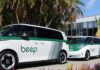


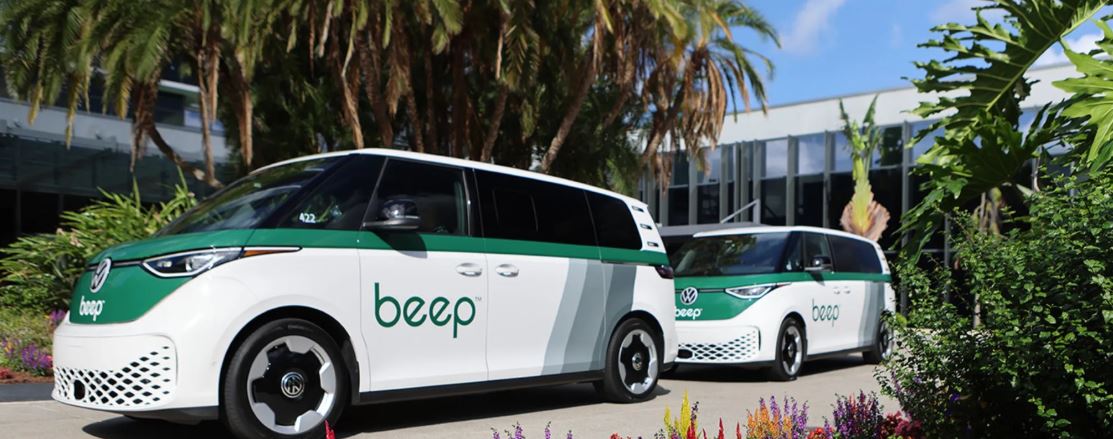

Beep is combining human-driven electric microtransit with autonomous technology following its September merger with Freebee, aiming to give cities a flexible path toward driverless services, a company executive said.
Alex Poirot, Beep’s chief corporate affairs officer, said the deal lets communities start with established electric, human-driven operations and later introduce autonomous vehicles as conditions allow. “A city can begin with a human-driven service, build ridership and understand travel patterns, and then introduce autonomous vehicles into the network as the technology, operating environment and community are ready,” Poirot said. The company’s AutonomOS platform is designed to manage those mixed fleets as a single mobility network.

Beep recently closed a Series B funding round that brought its total capital raised to about $130 million, with backing from Mobileye MBLY -3.50%↓. Poirot said the money will support further development of AutonomOS, expansion of deployments, integration of additional vehicle and autonomy platforms, and growth of the customer base. The goal, he said, is to turn autonomous driving technology into everyday transportation that cities, transit agencies, airports and campuses can use.
The combined company now operates in more than 60 communities and has carried more than 10 million riders. Poirot pointed to the Southeast — particularly Florida, Georgia and North Carolina — as the strongest region so far, citing population growth, demand for new mobility options, public-private partnerships and a willingness to test innovative services. He stressed that technology alone does not create successful systems. “You need a real transportation need, local partners who understand their community, thoughtful service design, and an operating model capable of earning public trust,” he said.
On the first-mile/last-mile challenge common in mid-sized cities and campuses, Poirot said the core issue is service design rather than vehicle technology. Riders care most about reliable pickups, connections and ease of use, he said. The merged company can design services around those needs and apply the appropriate mix of human-driven and autonomous vehicles. Over time, he added, autonomy can help make high-quality public mobility more scalable, accessible and sustainable.